The Fire and the Moose
On Mother’s Day 2025, during an unusually dry, hot, and windy few days in a drought-ridden spring in northern Minnesota, an unattended campfire sparked a fast-moving and highly destructive wildfire. The next day, while the heat and winds continued, a second fire started just miles away from that one in a hay pile. Almost immediately after the second fire, a cigarette thrown from the window of a car sparked a third fire just miles away from the first two that would come perilously close to the town I live in. The Camp House, Munger Shaw, and Jenkins Creek fires (later combined into the Brimson Complex fire) would eventually burn about 40,000 acres and destroy nearly 200 buildings, becoming one of the most destructive fires in recent Minnesota history.
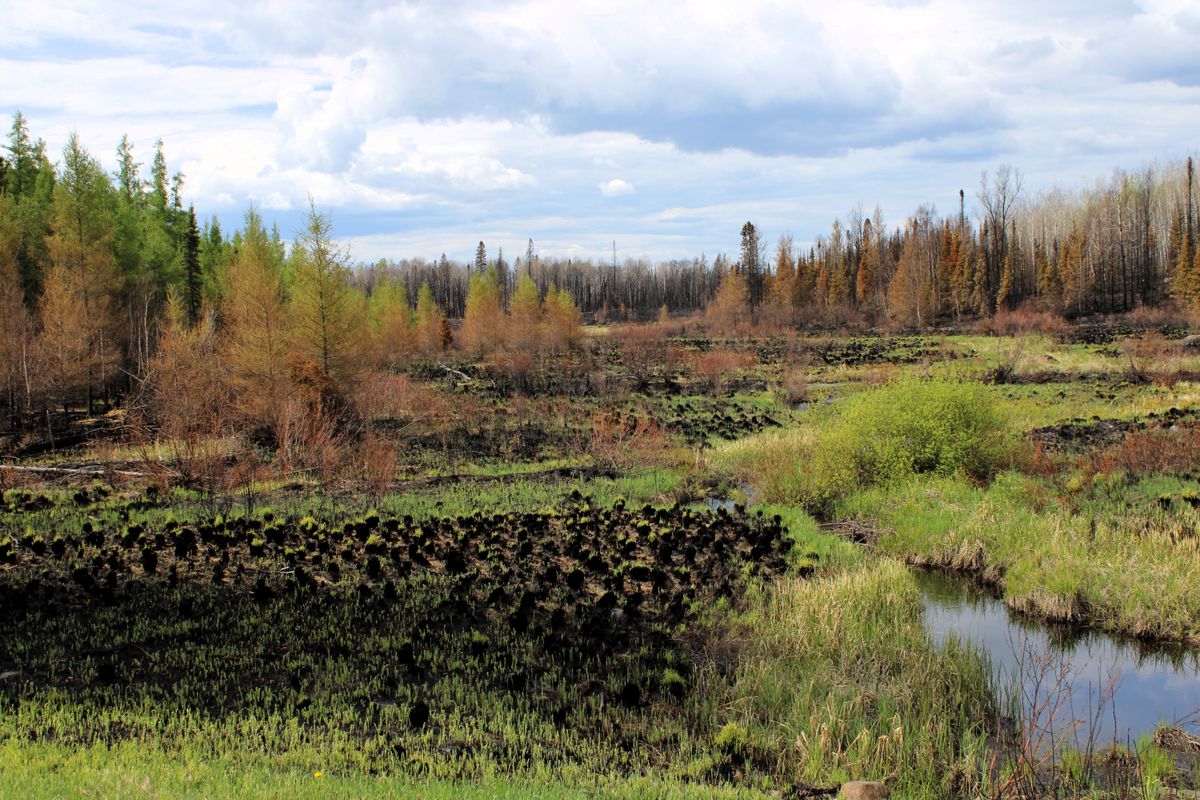
Before I get into that further, I want to start with the role fire plays in a healthy forest ecosystem. Boreal forests are naturally regenerative, and fire is a necessary part of their life cycle. Fires help burn away dead moss, fallen trees, and other litter on the forest floor, making way for new growth. Heat from fires helps open the seed cones of black spruce trees, after which they are released, dispersed, and grow into new sprouts. Other trees and shrubs native to these ecosystems quickly recover and sprout after a fire. Burns over time create a mosaic of forest in different stages of growth, suiting the needs of various plants and wildlife. The young foliage and saplings that sprout in the first years after a fire are rich in nutrients from the burn and provide valuable sustenance for wildlife. The nutrient-dense new growth that sprouts after a fire is a particularly favorable meal for moose, who also benefit from the lack of parasites in post-burn areas.
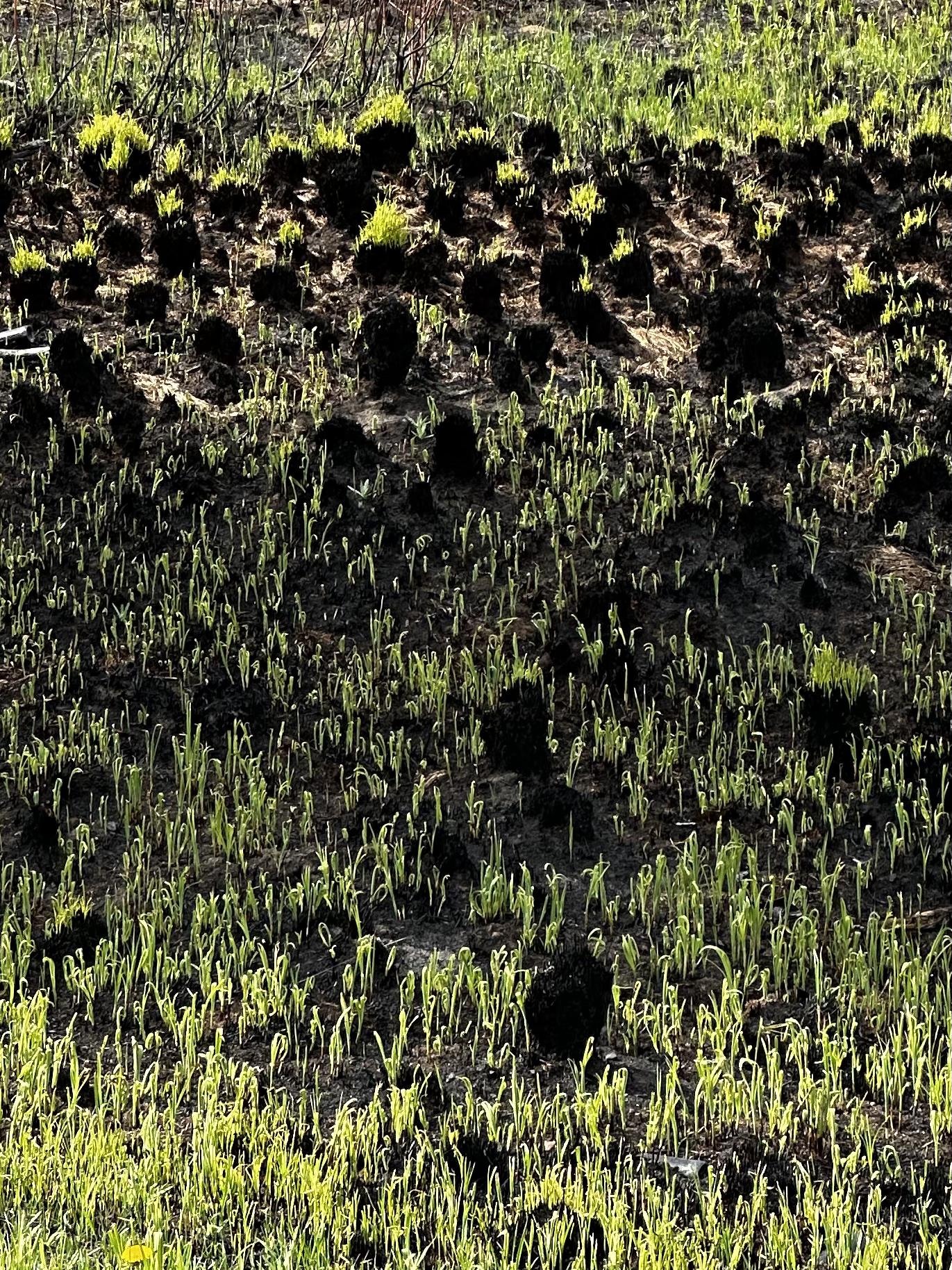
New sprouts in the post-burn area
Living this close to the boreal forest and having access to observe and explore it daily are among the main reasons I moved here from the Twin Cities, where I was born and raised. The section of the Superior National Forest that borders my town is truly wilderness. Recreation areas both in and outside of town offer a great opportunity to experience this wilderness and enjoy spotting wildlife. This forest is a rich ecosystem that sustains everything from moose, wolves, and bears to carnivorous plants, Great Grey and Boreal Owls, warblers, lichens, moss, and more. I’ve been fortunate enough to encounter a lot of this wildlife and plant life since I moved here.
I also knew that wildfires were a possibility.
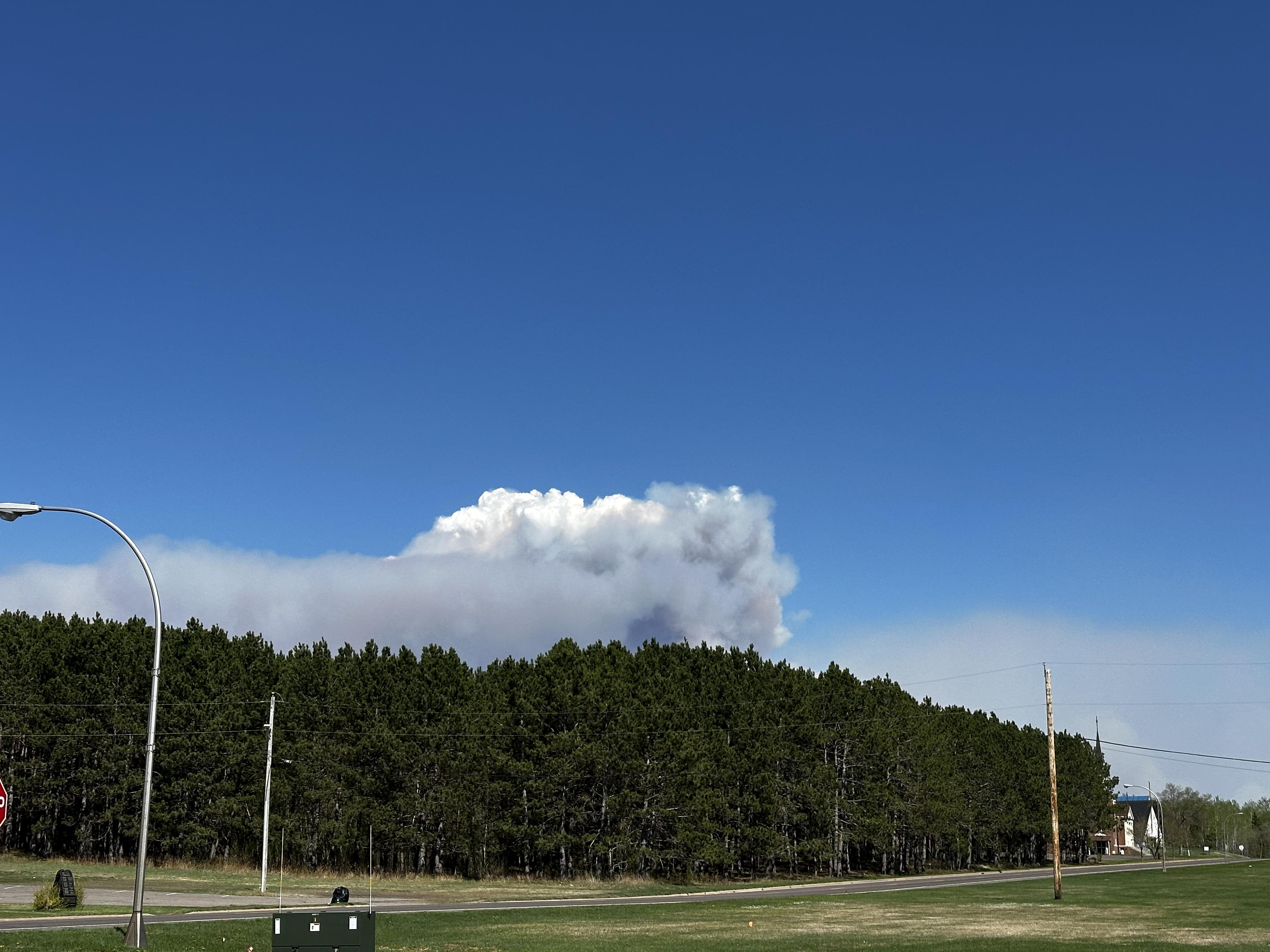
Plume of smoke from the Jenkins Creek fire
I have been preparing for various climate disasters for several years now. I keep tabs on where my essentials are, I have evacuation plans for myself and all of my pets, and equally importantly, I have practiced steeling myself emotionally for the unexpected and unprecedented. This awareness is crucial for anyone living in areas prone to wildfire, floods, and other natural disasters.
Around the fourth day after the Jenkins Creek fire started, a fast-moving east wind came through, blowing the fire within 5 miles of my town. The hot, dry wind was blowing fast and fierce in the evening when East Range Police officers came knocking door to door to let us know that we needed to be ready to evacuate at a moment’s notice. I had already packed most of what I and my seven pets would need for a while to survive, but I still hadn’t imagined that we would be this close to actually having to leave. I remember feeling the first wave of panic about my home, my first home that I had just purchased less than three years prior. The panic of the logistics of evacuating seven pets and realizing I hadn’t done a test run to make sure all the carriers would fit in the car. Down the street, my parents, who had moved here just after me, were also preparing to evacuate with their pets. At some point, I had also started to gather sentimental items next to the essentials - things that I would try and fit in the car somehow if I could. I would live this way for the next several weeks, with all of our supplies, necessities, and sentimental items sitting by the front door, in case we got the call to evacuate. I didn’t get much sleep. I obsessively checked the Watch Duty app and social media for updates. And I waited.
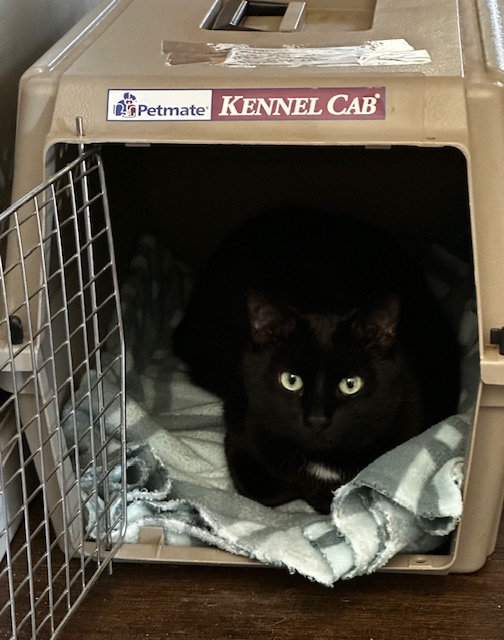
My cat Binx, getting used to the carrier.
What made the particular landscape of the Jenkins Creek fire challenging for the fire crew is that, as I said earlier, this area is true wilderness. There are no roads or trails where the fire was burning, so getting crews and equipment in to lay fire breaks and suppress active fire was hazardous work. Chinooks with the ability to draw water from nearby lakes were flown over with water drops, followed by Hot Shot crews dropped into the dense forest with a few days’ worth of supplies to mop up hot spots and lay fire breaks. At its peak, over 300 firefighters fought the Brimson Complex fire.
Chinooks gathering water from the local lake
Toward the end, when the crews were close to full containment, the team used heat-seeking drones to fly over the area and find hot spots - areas with smoldering or active fire. When the drones indicated a hot spot, a Hot Shot team would drop in to investigate and mop up. While the drones continued to pick up signals from a section of the fire area, the team was unable to find any active burn when they dropped in. After a few of these confusing cycles, they finally discovered the source of the hot spots - a moose and her calf, exploring the fresh burn area, looking for a meal. The danger was over for now, and nature was starting to emerge again.
In the era of the climate crisis, wildfires have been burning hotter and more intensely, often repeatedly re-burning over burn-scarred areas, destroying new growth and depriving the forest of time to regenerate between burns. My family and I are fortunate to have stayed safe and not had to evacuate. I am grateful to the crews that risked their own safety to battle this fire in challenging terrain, and to the communities who stepped up to help as well.
For information on how you can take action to mitigate climate change, visit the UN website on Actions for a Healthy Planet.